Can Physiotherapists Help Manage Scoliosis?

‘My child has scoliosis. Can exercise really help?’
The answer is yes — but not just any exercise. Physiotherapists trained in Physiotherapeutic Scoliosis Specific Exercises (PSSE) prescribed individually designed exercises to improve posture, breathing, spinal stability, and quality of life while reducing the risk of curve progression.
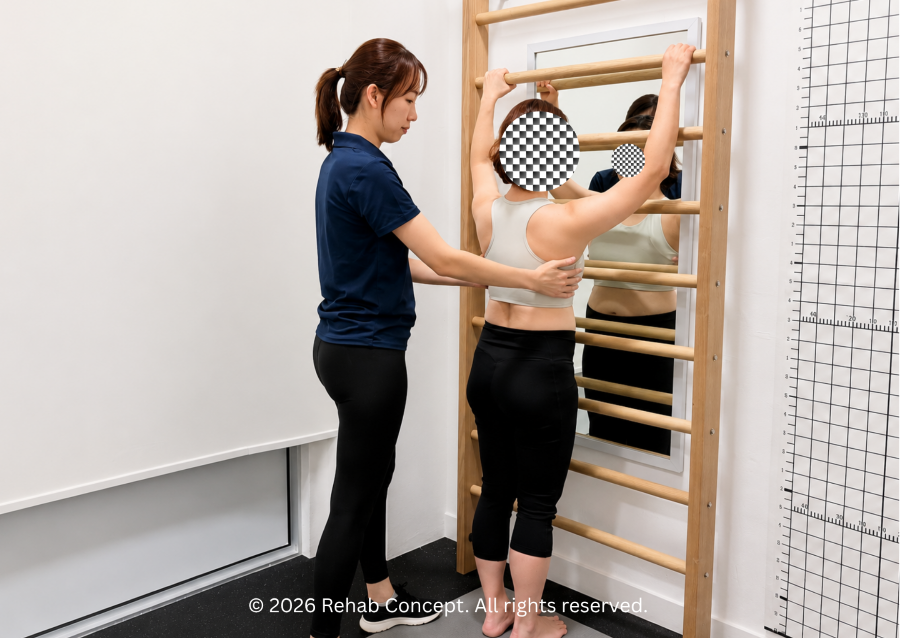
Physiotherapeutic Scoliosis Specific Exercise (PSSE) is a form of conservative management for scoliosis. It is recognised by the International Society on Scoliosis Orthopaedic and Rehabilitation Treatment (SOSORT). Unlike general strengthening or stretching exercises, PSSE focuses on three-dimensional (3D) correction of the spinal deformity, training in activities of daily living (ADL), stabilisation of the corrected posture, and patient education.
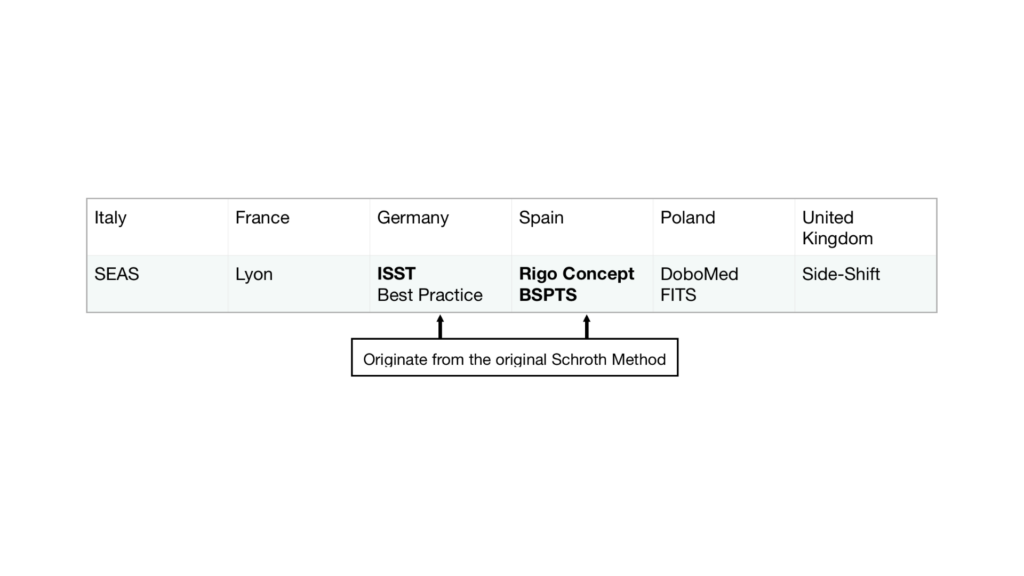
There are 7 major schools of PSSE recognised by SOSORT:
How does PSSE work?
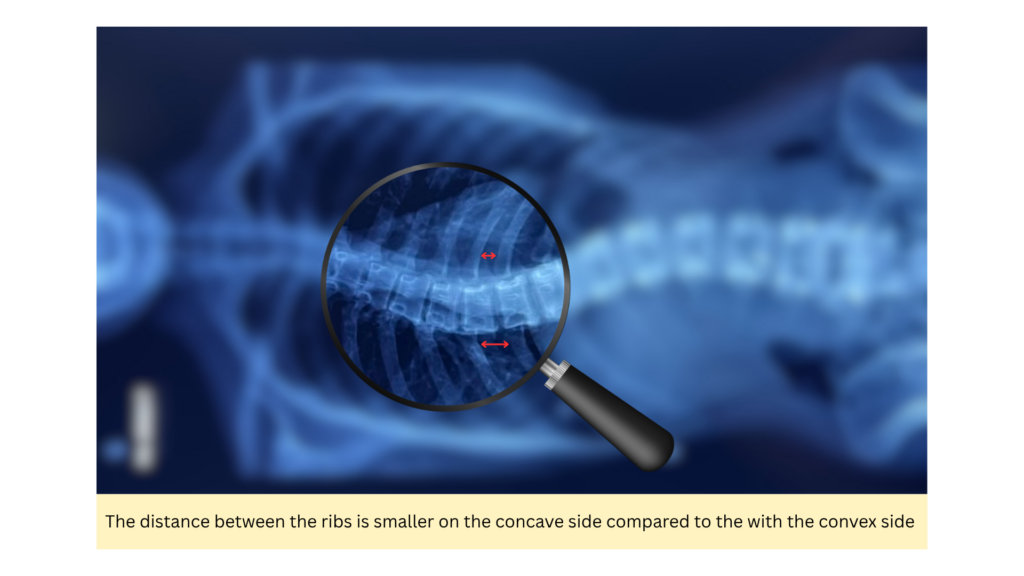
Scoliosis is more than just a sideways curve of the spine. It is a three- dimensional condition in which the spine curves sideways, rotates, and changes its normal alignment in all three planes. This spinal deformity creates uneven weight distribution across the vertebrae. According to the Hueter–Volkmann principle, increased compression on the concave side may slow vertebral growth, while reduced compression on the convex side allows relatively greater growth. This contributes to vertebral wedging and may lead to progressive curve worsening. As the curvature increases, the uneven loading also increases, creating a vicious cycle that leads to further curve progression.
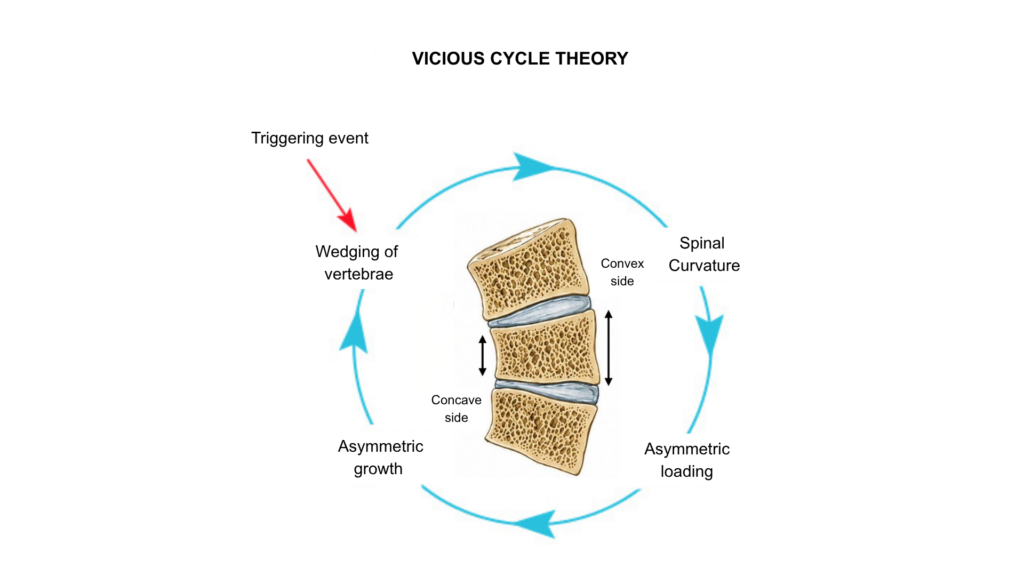
Considering that scoliosis is a three-dimensional deformity, PSSE uses three-dimensional correction techniques, including rotational breathing, postural correction, to help interrupt this vicious cycle.
Below is an example of how treatment is performed using the Rigo Concept.
Step1: Three-dimensional postural correction
The 3D postural correction is achieved by positioning and also using the rice bags or towels to position the trunk into the best possible alignment.
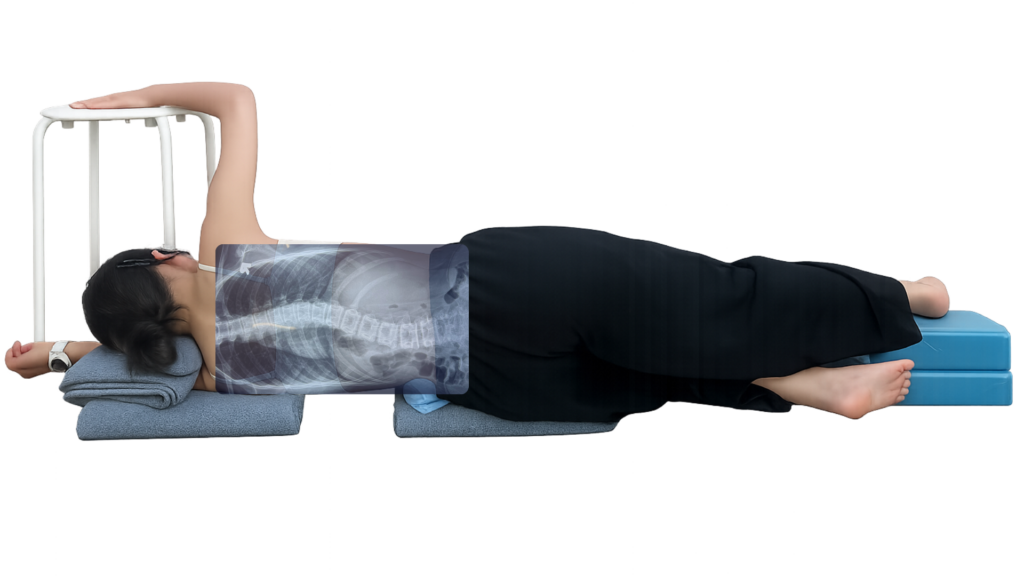
Step 2: Expansion Technique
After 3D postural correction, the expansion technique is used to open the collapsed region of the trunk. It helps to achieve a stable 3D postural correction and also to reduce asymmetrical loading across the spine and create a more balanced trunk posture.
Step 3: Muscle activation
With the 3D postural correction and expansion technique, the corrected posture is maintained through active isometric muscle activation, which helps stabilise the spine and trunk.
Step 4: Integration
After the exercise, we will still maintain the 3D postural correction with expansion to retrain the brain and body to recognise and maintain a corrected posture. This allows patients with scoliosis to integrate the corrected posture into their activities of daily living.
Am I a suitable candidate for PSSE?
- Juvenile idiopathic scoliosis (3-9 years old)
– Cobb angle < 20°
– Children in this age group will enter a period of rapid growth, during which the risk of curve progression is highest.
- Adolescents idiopathic scoliosis (10-17 years old)
– Cobb angle ≥ 20°, particularly those who are still growing or at risk of progression.
– Aim to keep the curve below 30° at skeletal maturity, as curves greater than 30° are more likely to continue progressing during adulthood.
- Adult idiopathic scoliosis
– Suitable for mild, moderate, and severe curves
– Improve posture and spinal stability
– Reduce pain where present
Is the PSSE effective in treating scoliosis?
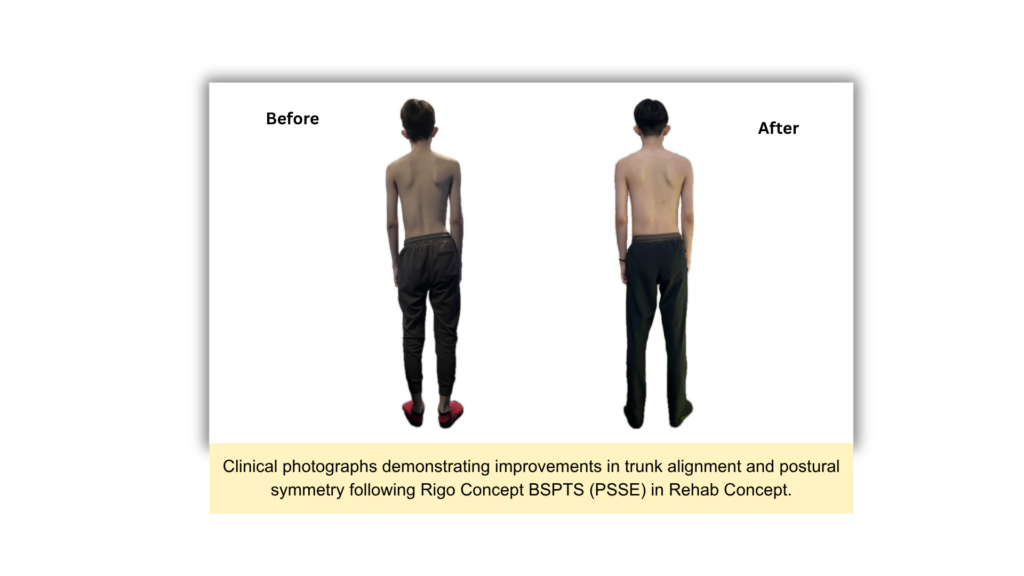
Yes. High-quality evidence, including randomised controlled trials and systematic reviews, supports the use of Schroth-based PSSE in adolescents with idiopathic scoliosis. Studies have demonstrated improvements in Cobb angle, trunk rotation, posture, breathing function, and health-related quality of life. The best outcomes are often achieved when Schroth exercises are combined with bracing in individuals who require brace treatment, with better results than bracing alone.
However, PSSE are not a replacement for bracing or surgery when these treatments are clinically indicated. Instead, they are used as a conservative therapeutic approach, either as a stand-alone treatment or in combination with bracing or surgery, depending on the individual’s age, skeletal maturity, curve severity, and risk of progression.
Frequently Asked Questions (FAQ)
1. Can my child simply do Pilates, yoga or swimming instead?
– General exercise is beneficial for overall health, but it does not replace PSSE. PSSE is specifically designed to correct the three-dimensional spinal deformity and should be prescribed according to the individual’s curve pattern and clinical presentation.
2. Is PSSE suitable for adults?
– Yes. Although adult scoliosis curves are usually fully developed, progression may still occur, particularly when the Cobb angle > 30°. PSSE can help improve posture, spinal stability, function, and pain where present.
3. Do I still need a brace if I am doing PSSE?
– It depends on the severity of the curve and the individual’s risk of progression. PSSE does not replace bracing when brace treatment is clinically indicated.
4. How long does it take to see improvements?
– This varies between individuals and depends on factors such as age, curve severity, skeletal maturity, and adherence to the prescribed exercise programme.
Why choose Rehab Concept?
- Certified in ISST Schroth Method
- Certified in Rigo Concept BSPTS
- Individualised treatment based on scoliosis classification
- Comprehensive assessment and evidence-based management
- Personalised home exercise programme with on-going follow-up
Key message:
- PSSE is a personalised, evidence-based exercise approach for scoliosis.
- PSSE focuses on 3D active self-correction, stabilisation of the corrected posture, ADL training and patient education.
- Early assessment helps identify the most appropriate management plan
- Consistency practice and regular follow-up are essential for achieving the best long term outcomes.
You may visit the link below to have more ideas regarding the Schroth Method exercises. https://www.instagram.com/reel/DNXK3QZJxj7/?igsh=MTBrNTBzanhraWdzYQ== https://www.instagram.com/reel/DNIGrVkJ_ZC/?igsh=MW1tMnM0NW9qeTZ3aw==
Reference:
- Negrini, S., et al. (2018). 2016 SOSORT guidelines: Orthopaedic and rehabilitation treatment of idiopathic scoliosis during growth. Scoliosis and Spinal Disorders, 13, 3. https://doi.org/10.1186/s13013-017-0145-8
- Kwan, K.Y.H., Cheng, A.C., Koh, H.Y. et al. Effectiveness of Schroth exercises during bracing in adolescent idiopathic scoliosis: results from a preliminary study—SOSORT Award 2017 Winner. Scoliosis 12, 32 (2017). https://doi.org/ 10.1186/s13013-017-0139-6
- Ceballos-Laita, L., et al. (2023). The effectiveness of the Schroth method on Cobb angle, quality of life, and trunk rotation angle in adolescent idiopathic scoliosis: A systematic review and meta-analysis. European Journal of Physical and Rehabilitation Medicine, 59(2), 228–236. https://doi.org/10.23736/S1973-9087.23.07654-2