After Baby, Things Feel Different? – Let’s Talk Pelvic Floor Recovery

You did it. You brought a tiny human into the world, and you’re a rockstar. But now, something feels… off. Maybe you’re leaking when you laugh or feeling a strange heaviness down there. Welcome to pelvic floor weakness after childbirth—a common, hush-hush struggle that’s way more fixable than you might think. Let’s dive in, keep it real, and give your pelvic floor the TLC it deserves.
Pelvic floor weakness after childbirth is most common after bearing a child. It happens from the combined effects of prolonged pressure from pregnancy, hormonal softening of tissues, significant stretching during vaginal delivery, potential nerve or tissue damage, and, to a lesser extent, the impact of caesarean deliveries.
What’s this pelvic floor thing?
Pelvic floor is group of muscles, ligaments, and connective tissues that form a hammock-like structure at the base of the pelvis—supports the pelvic organs, including the bladder, uterus (in females), and rectum, and plays a key role in functions like ; bowel and bladder control, core stability and childbirth(in female). During pregnancy and childbirth, this hammock gets stretched—sometimes a lot. Whether you had a vaginal delivery or a C-section, or even just carrying that baby for nine months can leave those muscles weak, stretched, or even injured.
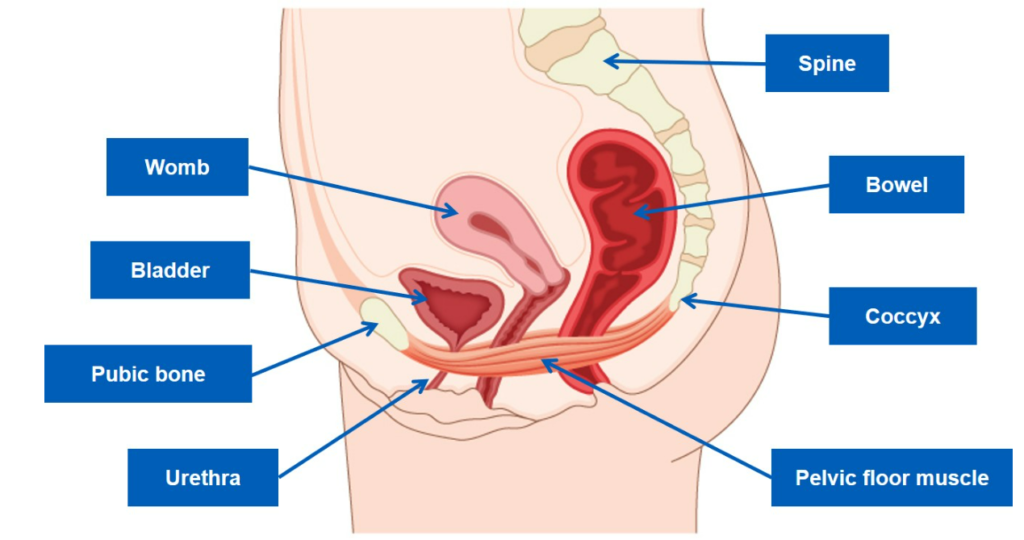
Figure 1: Pelvic floor anatomy from NHS – Kent Community Health, Caring for the pelvic floor muscle for people with female anatomy (25 Nov, 2022)
Why does childbirth take a toll?
Pregnancy and delivery are like a marathon for your pelvic floor. Here’s why it takes a hit:
- Pregnancy weight: Carrying a baby (plus placenta, fluids, and more) puts constant pressure on those muscles.
- Vaginal delivery: Pushing can stretch or tear pelvic floor muscles, especially with long labors or big babies.
- C-sections: Even without vaginal delivery, surgery can weaken nearby muscles or nerves.
- Hormones: Pregnancy hormones like relaxin loosen your ligaments, making your pelvic floor less stable.
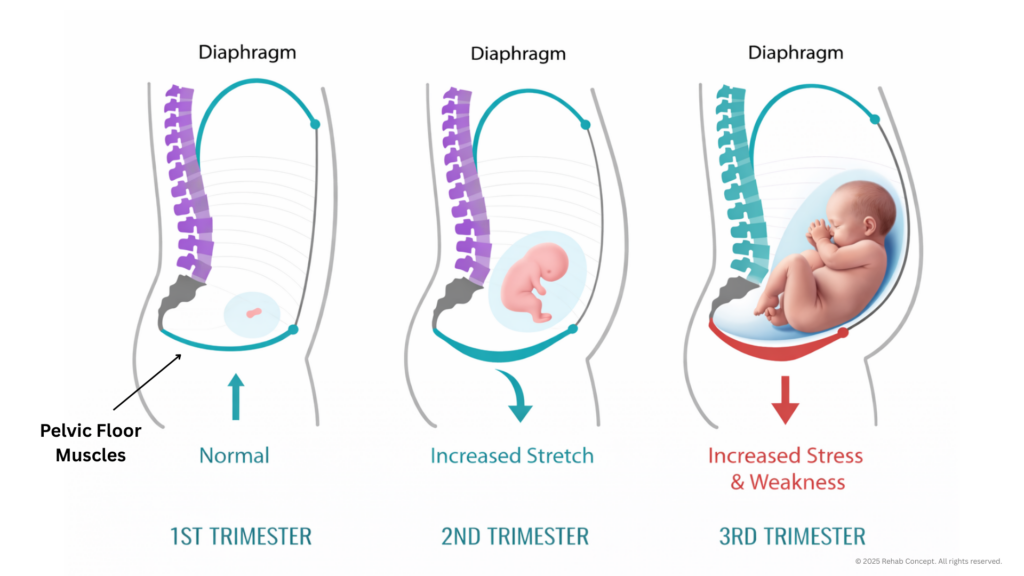
Figure 2: Pelvic floor changes across trimesters.
How to spot it?
Pelvic floor weakness can be sneaky. Here’s what to look out for:
- Leaking pee when you sneeze, laugh, or carry your little one (hat’s called stress incontinence).
- A heavy, “something’s dropping” feeling in your pelvis.
- Hard to control gas or poo (relax, it happens).
- Pain during sex or feeling like things are “too loose.”
- Lower back or pelvic pain that feels like more than just “new mum tired.”
If any of this sounds like you, don’t panic. You’re not alone, and it’s not forever.
Why does it matter?
Ignoring pelvic floor weakness is like ignoring a loose stitch in your favorite sweater—it’ll only unravel more. Left unchecked, it can lead to bigger issues like prolapse (when organs start to slip) or chronic discomfort. Plus, it can sap your confidence. Who wants to worry about leaks during a playdate? Addressing it now sets you up for a stronger, more comfortable future.
How Women’s Health Physiotherapists Check for Pelvic Floor Weakness After Childbirth?
At Rehab Concept, our women’s health physiotherapists use a thorough, caring approach to assess pelvic floor weakness after childbirth. Here’s what you can expect during your visit:
- Case History(Your Story): We’ll have a chat about your pregnancy and delivery (vaginal or C-section), any pelvic surgeries, and symptoms like leaks, heaviness, or pain. We’ll also ask about your bladder and bowel habits to get the full picture.
- Pelvic Floor Check: We’ll assess your pelvic floor muscles, either externally or with a gentle internal exam to test muscle strength and coordination.
- Physical assessment (Body Check): We’ll look at your posture and test the strength of nearby muscles like your abs, glutes, and thighs, since they work together with your pelvic floor to keep you strong.
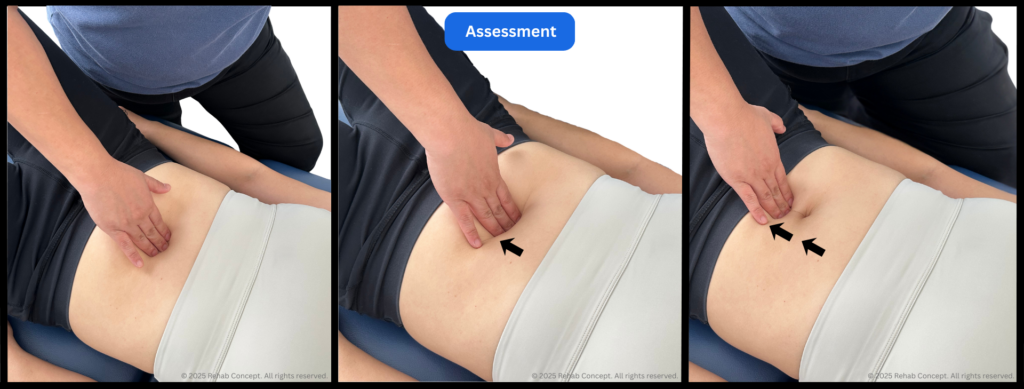
Figure 3: Part of the assessment
How Do We Treat Pelvic Floor Weakness?
At Rehab Concept, we focus on helping new mums recover from pelvic floor weakness after childbirth. Our goal is to reduce discomfort, improve pelvic floor function, and build strength with gentle, non-surgical treatments designed just for you.
Our Treatment plan include :
- Pelvic floor exercise – These strengthen the muscles that support your bladder, uterus and bowels.
- Core and posture exercises – Gentle moves like pelvic tilts or glute bridges help your abs and pelvic floor work together.
- Breathing and relaxation technique – to help your pelvic floor relax and work naturally. Sometimes, muscles are too tight (not just weak) after childbirth
- Lifestyle tips/activity modification – advice on practical ways to protect your pelvic floor such as modification on lifting heavy, managing constipation. These can help in preventing extra strain on your pelvic floor muscles.
Most cases of pelvic floor weakness after childbirth improve within 4-6 weeks with consistent physiotherapy. Some severe cases may take up to 6 months. Factors like how severe the weakness is, your pre-pregnancy fitness, and how regularly you do your exercises affect the timeline. Sticking to the plan is key!
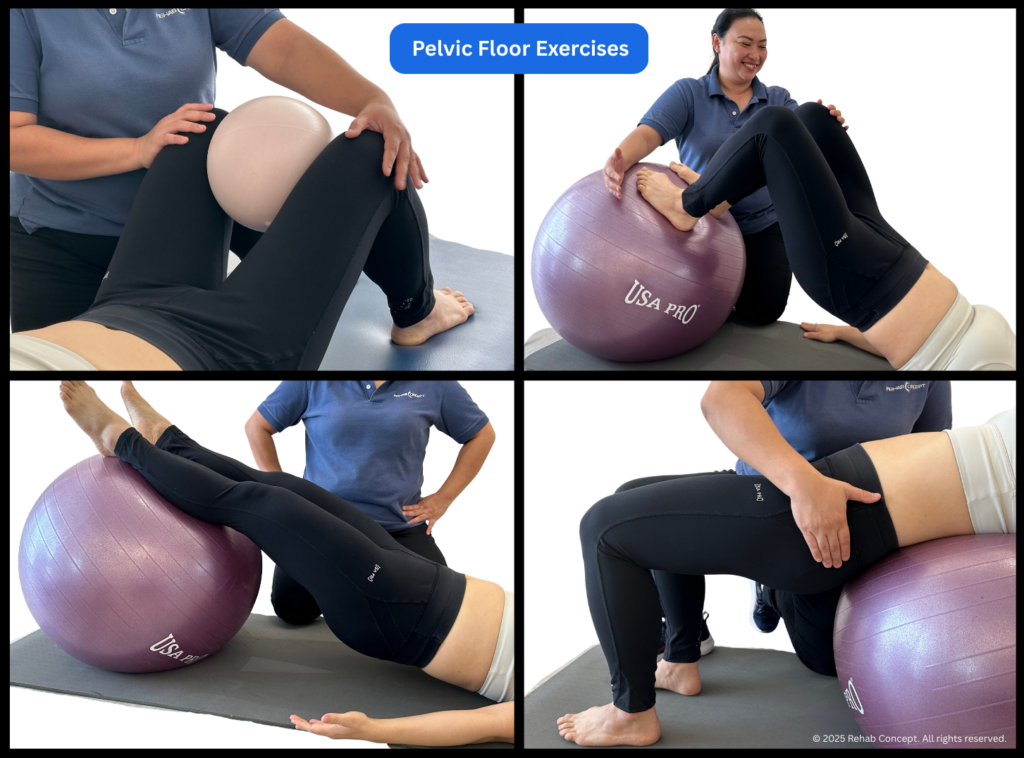
Figure 4: Pelvic floor exercises guided by our physiotherapist.
What You Need to Know
Pelvic floor weakness isn’t just a “new mum” problem. It can hit first-time mums, experienced ones, or even those who’ve had C-sections. It’s not your fault, and it’s not something you have to live with. Your pelvic floor worked hard during pregnancy—now it’s time to give it the care it needs with the right treatment.
A tailored plan with expert guidance can really boost your recovery and get your confidence back. Don’t hold off—help is here! Book a session with Rehab Concept and start feeling like yourself again today.
Click the link below to find out more:
https://www.instagram.com/reel/DKReR-6vVnn/?utm_source=ig_web_copy_link&igsh=MzRlODBiNWFlZA==
https://www.instagram.com/reel/DKR4mRUPDXb/?utm_source=ig_web_copy_link&igsh=MzRlODBiNWFlZA==
https://www.instagram.com/reel/DKTUAO4Py-z/?utm_source=ig_web_copy_link&igsh=MzRlODBiNWFlZA==