Why Does My Belly Still Look Pregnant After Birth?

‘My baby is 1 year old. I should have recovered from childbirth. But why does my belly still look pregnant?’
And your stomach feels soft, your core feels weak, sometimes you notice a small bulge or “doming” when you sit up, lift your baby, or when you cough or sneeze.
You start to wonder:
- ‘Why is my core still weak?’
- ‘Do I have diastasis recti?’
- ‘Should I be doing more ab exercises?’
The answer may be more complicated than simply doing more crunches.
 Figure 1: Diastasis Recti often presents as a mommy pooch belly.
What Is Diastasis Recti?
Diastasis recti, also called abdominal separation, is a change in the connective tissue between the two sides of your abdominal muscles. During pregnancy, your abdominal wall stretches as your baby grows. After birth, your body gradually adapts and recovers.
For some women, changes in the abdominal wall can continue and may affect core strength, movement, and exercise. A physiotherapist will assess your abdomen for diastasis recti by palpating for the separation on the midline of the body and assess for the extend of gapping between both sides of abdominal muscle known as Rectus Abdominis.
Here’s something important to take note:
- Having a postpartum belly does not automatically mean you have diastasis recti. It’s best to be assessed by a Women’s Health physiotherapist.
- Having diastasis recti doesn’t mean your body is broken. It can recover by doing the right things as advised by your Women’s Health physiotherapist.
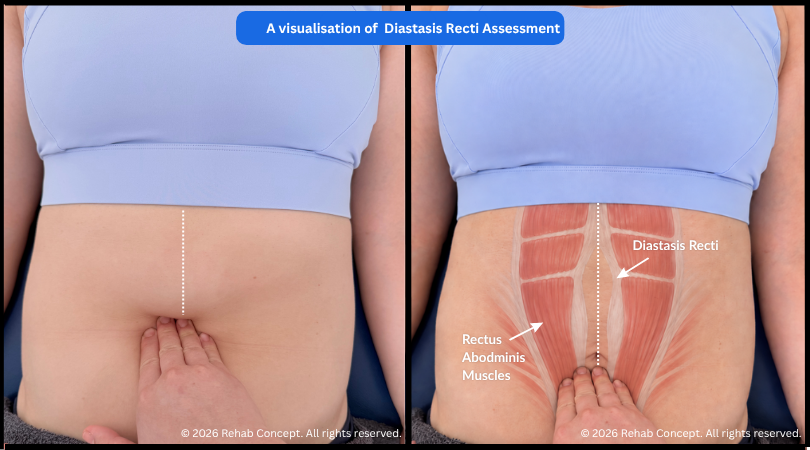 Figure 2: Assessment of Diastasis Recti.
But, How Does Diastasis Recti Make My Core Weak?
Our core muscles are more than just abdominal muscles on our belly. They are made up of:
- abdominal muscles,
- breathing organs such as lungs and diaphragm,
- pelvic floor, and
- back muscles.
These muscles work together to maintain intra-abdominal pressure. This pressure keeps your body upright, helps to maintain posture, allows stabled, controlled movement to occur simultaneously in the spine, arms and legs. It also helps to hold the internal organ in place within abdominal cavity. A functional ‘core’ help you feel strong yet mobile at the same time.
A split in the abdominal muscles – namely the Rectus Abdominus (Figure 2) creates an ‘opening’ where the muscle loss its ability to contract and support our body. The ‘opening’ leads to abdominal organs pushing forward, altering the abdominal pressure. Loss of muscle contractile ability and changed in intra-abdominal pressure led to weakness of your core.
Other than weakness, you may notice other issues that come along with weak core sure as:
- Poor endurance and posture – it become hard to maintain an upright posture;
- Abdomen bulges or domes during movement – especially when body is in flexed position during lifting or sneezing;
- Struggle to return to exercise – even simple stretching or prolonged walking feel tiring;
- Lifting or carrying feels strenuous;
- Back or pelvic pain every now and then;
- Bladder or bowel changes – frequent urine of faecal leaking or constipation.
While diastasis recti contribute to these symptoms, they may also have different causes, which is why an individual assessment by a Women’s Health / Pelvic Health physiotherapist is important.
What Should Postpartum Core Recovery Look Like?
So postpartum core recovery isn’t simply about getting a flatter stomach or achieving a bikini body. It’s about learning how to breathe, control pressure, move, and build strength again. Instead of rushing into intense abdominal exercises, recovery should be gradual.
In Rehab Concept, our women’s health rehab / pelvic health rehab session focus on:
- Breathing
– Learning to coordinate your breathing with movement and pressure. - Deep core control
– Working on activating your deep abdominal muscles without excessive bracing, progressively strengthen them.
- Pelvic floor coordination
– Understanding how your pelvic floor works with your core.
- Functional strengthening
– Building strength for daily life movements such as lifting your child, carrying groceries, squatting to reach down, and getting up from the floor.
- Progressive exercise
– Gradually returning to the activities and workouts you enjoy.
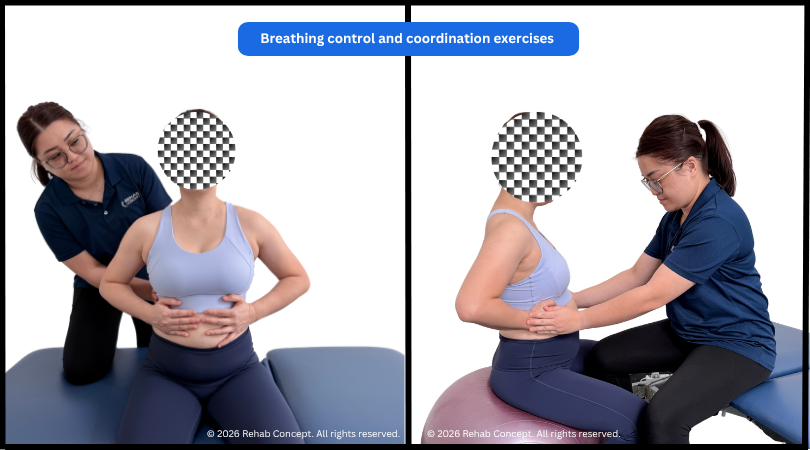 Figure 3: Breathing control and coordination exercises – one of the key focus areas in Diastasis Recti and pelvic floor rehabilitation.
Can I Fully “Close the Gap”?
Not necessarily. Some of women can achieve a fully closure while some of women are left with minimal gap. While abdominal separation is still in the picture, core function matters more. To self-assess how much progress have you made, here’s what you can ask yourself:
- Can I lift my baby comfortably?
- Can I squat, walk, carry, and move confidently?
- Can I exercise without excessive pressure, discomfort, or instability?
These are important signs of functional postpartum recovery. If you’re seeing improvement, then you’re on track!
You Don’t Need to Get Your “Old Body” Back
Your body has changed through pregnancy and childbirth—and that’s not something you need to be ashamed of. We like to emphasis — the goal of postpartum rehab isn’t simply to make your stomach flat. It’s about helping you become stronger, more confident, and comfortable in your body again.
When Should You See a Physiotherapist?
Consider a women’s health or pelvic floor physiotherapy assessment if you have persistent:
- Core weakness
- Abdominal bulging or doming
- Back or pelvic discomfort
- Pelvic heaviness
- Urinary or bowel leakage
- Difficulty returning to exercise
A women’s health or pelvic floor physiotherapist can assess your core, abdominal wall, pelvic floor, and movement and develop a rehabilitation plan around your individual needs.
Frequently Asked Questions (FAQ)
- Can abdomen crunch exercise reduce the ‘gap’ for me?
Abdominal crunch may not be suitable for people with severe Diastasis Recti. One with weak abdominal contraction may compensate the movement by overworking other muscles, or it may worsen the diastasis recti as the abdominal contents(organs) exert more force on the separated muscles.
- Can traditional massage close the abdominal separation?
While massage helps to ease tightness and soreness around the abdominal and back muscles, it does not help to close ‘the gap’. To reduce the abdominal separation, we need to strengthen the muscles.
- I saw some advertisement about using some equipment to heal the muscles. Does it work?
You most likely came across electrotherapy treatment. Electrotherapy refers to adjunct treatment using some therapeutic modalities that generate heats, electromagnetic wave, sound waves etc. This approach may be helpful for temporary pain relief but not the modalities and the approach itself does not strengthen the muscle. To reduce the abdominal separation, we need to strengthen the muscles.
- Can men have Diastasis Recti?
Yes, men are also affected by diastasis recti due to visceral obesity, improper / heavy lifting, excessive high-intensity ab exercises, and from the incision of an abdominal surgery.
- I am a man living with diastasis recti because of my abdominal surgery. Do I go through the same rehab process as the lady?
Yes, you will go through a similar rehab process. The principles of pelvic floor / diastasis recti rehab do not vary greatly, but the program planning varies by individual needs, functional limitations, and most importantly – rehab goals.
- I want to find out more about my condition, who should I contact?
You can reach out to both of our centres by clicking on the floating WhatsApp button on the right — we’ll be happy to guide you.
Ready to Feel Strong Again?
You don’t have to guess whether your core is recovering properly. Speak to our women’s health / pelvic rehab physiotherapists at Rehab Concept Kuching and Petaling Jaya. Don’t wait until weakness or discomfort limits what you enjoy. Start your postpartum recovery with the right guidance.
Follow our Instagram and check out some helpful tips in our other articles:
https://www.rehabconcept.com.my/after-baby-things-feel-different-lets-talk-pelvic-floor-recovery/
https://www.rehabconcept.com.my/frequent-urges-or-urine-leaks-understanding-urinary-incontinence/
READ ALSO: Feeling Pressure or Heaviness Down There?