Why Does My Knee Feel Unstable After ACL Injury?

Does your knee feel like it might give way when you run, jump, or change direction after an ACL injury? Or do you have a feeling of instability in your ACL injured knee and you’re afraid to land after jumping? Many people assume this happens simply because the ligament is torn, but that’s only part of the story. In reality, knee stability depends on your ligaments, muscles, and nervous system working together. In this article, we’ll explain why your knee feels unstable and how physiotherapy can help restore your knee stability, confidence and movement.
What Is ACL?
The anterior cruciate ligament or ACL is one of the main stabilising ligaments in your knee joint. It prevents the shin bone from moving too far forward on the thigh bone and helps control twisting movements. These functions are especially important during running, jumping, pivoting, and changing direction. These are the type of movements you will perform regularly in a variety of sports especially if you were trying to dodge around an opponent in a football or basketball match.
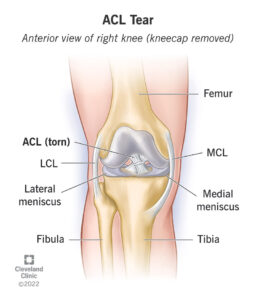
Image source: Cleveland Clinic. (2023, Feb 8). ACL Tear. https://my.clevelandclinic.org/health/diseases/16576-acl-tear. Used for educational purposes.
What Causes Your Knee To Feel Unstable?
The ACL is the mechanical stabiliser of the knee and when the ACL tears, there’s an excessive forward movement of the shin bone, the knee can no longer resist these forces, particularly during pivoting, cutting, sudden change in direction, and landing from a jump. However, ACL injury isn’t just mechanical, it can also be:
- Loss of Proprioception
First of all, what is proprioception? It’s your body’s ability to sense joint position, movements, and actions. It’s how your brain knows where your knee is without you looking at it.
The ACL contains tiny sensory nerve endings that constantly tell your brain where your knee is and how it’s moving. When the ACL and the nerve endings tear, that proprioceptive feedback is disrupted immediately. As a result, the brain receives less information about the knee position and movement. This leads to lack of muscle coordination to stabilise the knee joint and causes the knee to feel unstable or give way.
- Muscle Weakness
You might notice your quadriceps muscle start to weaken rapidly and profoundly after injury. This is because after an ACL injury, pain, swelling, and changes in the nervous system can make it difficult to fully activate the quadriceps. This protective response is known as arthrogenic muscle inhibition (AMI). As a result, the muscle becomes weaker and smaller if it isn’t retrained.
It’s a reflexive neurological shut-down of muscle activation after knee injury. This is our body’s way of protecting the injured joint and preventing further injury but this can seriously delay or limit functional recovery if left untreated. Because if the quadriceps muscle cannot be fully activated, it will be difficult for you to build strength effectively and eventually leads to compensatory patterns like hip dominant movement and poor knee loading.
- Impaired Neuromuscular Control
Neuromuscular control refers to the ability of the brain and spinal cord to coordinate muscle activation patterns to stabilise the knee joint. Impairments in neuromuscular control after ACL injury can lead to abnormal movement patterns, compensatory movement strategies, and an increased likelihood to other injuries.
This is also linked to muscle imbalances between the hip and knee muscles, which play a crucial role in knee joint stabilization during functional activities. Following an ACL injury, neuromuscular adaptation happens due to altered sensorimotor control. These changes in sensorimotor control are caused by altered afferent inputs to the central nervous system due to the loss of sensory nerve endings of the ACL.
How Physiotherapy Helps Restore Knee Stability?
Rehabilitation after ACL injury needs to be targeted – strength, proprioception, balance, neuromuscular, and then sport-specific control. Because after an ACL injury, you’ve got to retrain an entire neuromuscular system, including the brain. Rehabilitation follows a progressive approach, rather than jumping straight back into running or sport, each stage builds on the previous one to help your knee regain strength, control, and confidence. At Rehab Concept, your physiotherapy session for ACL rehab could look like this:
- Strength Training
The muscles in your lower limb play an important role in stabilizing your knee joint. The quadriceps, hamstrings, glutes, and calf muscles all work together to control and stabilise your knee as you perform various activities, hence it’s important to strengthen these muscles.
In ACL injury recovery, progressive strength training is a key part of rehabilitation for strengthening the muscles. In the early stages, treatment may begin with isometric exercises, where the muscle contracts without significant joint movement. As your strength and control improve, rehabilitation can progress to isotonic exercises (muscles produce force while the joint moves) and eccentric exercises (muscles lengthen under resistance). Towards the advanced stage of recovery, we’ll incorporate dynamic and functional strength training with the aim of restoring strength and muscle size.
- Proprioception Training
ACL rehabilitation is not just about rebuilding strength – it also involves retraining the nervous system to sense and control the knee. With proprioception training, you can improve your joint stability, mobility and motor control.
Exercises like weight shifts and slow, controlled squats can help restore joint position sense and control. It can then be progressed to single-leg control like step-ups, step-downs, and single-leg squats to challenge the nervous system to stabilize the knee under load.
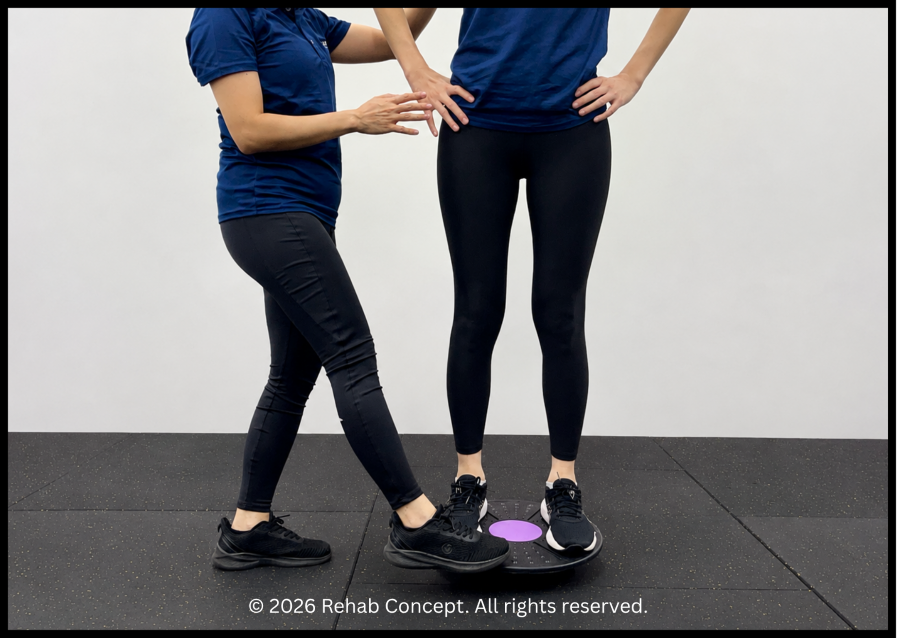
- Balance Training
There are two types of balance exercises: static and dynamic. Static balance includes a single-leg stand that is later progressed to eyes closed and head turns. Dynamic balance includes the use of unstable surfaces like foam pad, wobble board or BOSU ball and single-leg reach. Incorporating dual-tasking like balance and throwing or catching a ball can further challenge your brain with visual-motor training.
- Neuromuscular Training
ACL rehab later focuses on improving reactive neuromuscular control – the ability of the brain and muscles to work together to stabilise the knee during movement. Neuromuscular training includes perturbation training, plyometrics, agility drills, and movement retraining. These exercises improve muscle activation, coordination, and dynamic knee stability, helping your body respond more effectively during everyday activities. This is where the knee learns to respond to unexpected movement, which is critical for sports.
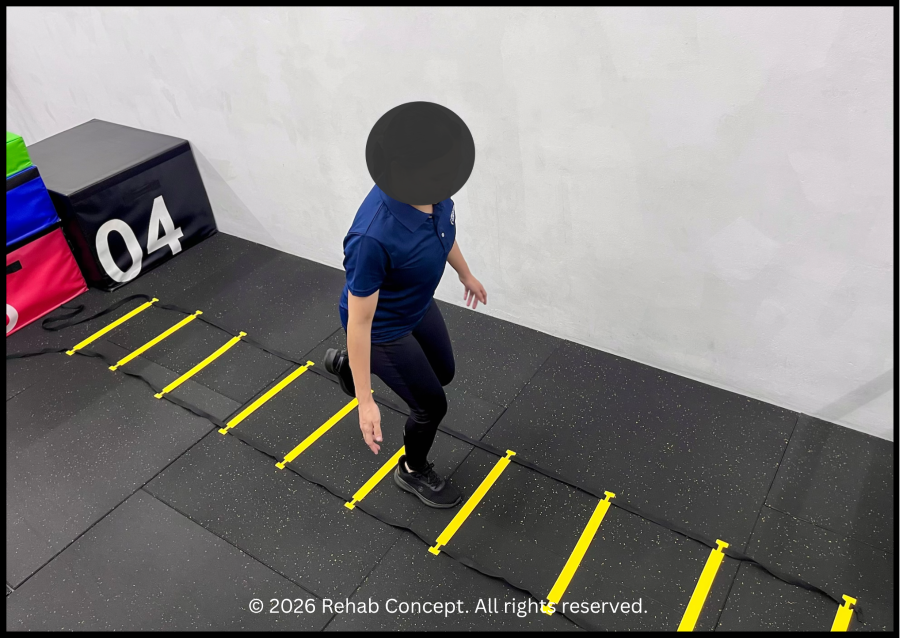
- Return-to-Sport Rehabilitation
This final stage of ACL rehabilitation gradually prepares your knee for the fast, unpredictable demands of sport. As your strength and movement control improve, it’s time to progress you to sport-specific activities like: sprint acceleration and deceleration, cutting and pivoting drills, jump-landing training, and reactive exercises that require quick decision-making and sudden changes of direction. These exercises help restore movement quality, reduce the risk of re-injury, and ensure you can safely return to sport based on functional performance rather than time alone.
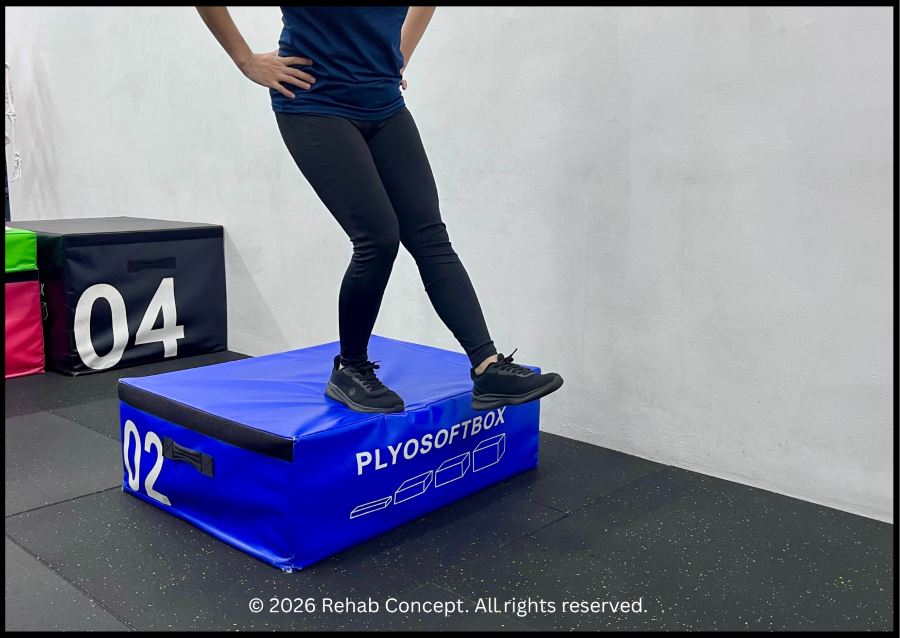
If your knee feels unstable after an ACL injury, don’t ignore it. At Rehab Concept, after a thorough physiotherapy assessment, we’ll guide you through a rehabilitation programme tailored to your goals. Rehabilitation after an ACL injury focuses not only on rebuilding strength, but also on improving proprioception, balance, movement control, and the ability of your muscles to respond appropriately during movement. Through progressive rehabilitation, physiotherapy helps restore your ability to produce, absorb, and control force. This not only improves knee stability and confidence but also helps you return safely to the activities and sports you enjoy.
Frequently Asked Questions (FAQs)
1. Why does my knee feel unstable after an ACL injury?
An ACL injury affects more than just the ligament. It can also reduce your proprioception (joint position sense), weaken your muscles, and impair neuromuscular control. Together, these changes can make your knee feel like it might buckle, shift, or give way.
2. Why does my knee still feel unstable even though my pain has improved?
Pain and stability are not the same. Even if your pain has settled, muscle weakness, reduced proprioception, or poor neuromuscular control may affect how stable your knee feels.
3. How long does it take to regain knee stability after an ACL injury?
Recovery varies from person to person. Many people require several months of structured rehabilitation to rebuild strength, balance, coordination, and confidence. Returning to sports often takes 9 to 12 months or longer, depending on your progress.
4. What muscles should I strengthen after an ACL injury?
The quadriceps are a major focus of rehabilitation, but the hamstrings, glutes, core, and calf muscles are equally important. These muscles work together to provide dynamic stability for the knee.
5. When can I return to running or sport after an ACL injury?
Returning to sport should be based on your strength, movement quality, functional performance, and confidence – not simply the number of months since your injury or surgery. Your physiotherapist will assess whether you are ready to progress safely.
6. Will my knee ever feel normal again?
Many people regain excellent knee function after appropriate rehabilitation. However, recovery takes time and requires more than rebuilding strength or just waiting it out. Training proprioception, neuromuscular control and confidence are equally important for helping the knee feel stable again.
7. When should I see a physiotherapist after an ACL injury?
It’s best to see a physiotherapist as early as possible after your injury. Early rehabilitation can help reduce muscle weakness, restore knee movement, improve stability, and guide you safely through each stage of recovery.
8. I want to find out more about ACL rehab in Kuching or Petaling Jaya, who should I contact?
You can reach out to our centres by clicking on the floating Whatsapp button on the right – we’ll be happy to guide you.
Follow our instagram and check out some helpful tips here: https://www.instagram.com/rehabconcept.my/