Why Is My Neck Pain Spreading to My Arm?

This is a common question — does it sound like what you’re going through now? You’re at the right place. This article will answer your questions about your condition.
What Causes the Sharp Pain?
Before we get into what causes the sharp pain, let’s talk about where the pain can possibly come from. Our necks are made up of 7 segments of spinal vertebrae, namely C1 to C7. In between these vertebral bodies, there are intervertebral spaces where the intervertebral discs are located, and 8 pairs of nerve roots exit the cervical spine on both sides of the intervertebral space, just next to the discs (Figure 1 below).
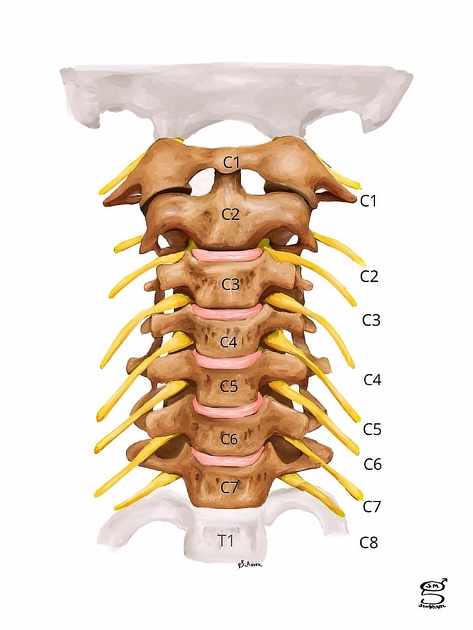
Figure 1: Cervical nerves. Image source: https://radiopaedia.org/cases
These nerve roots continue as peripheral nerves travel down to their respective areas in our arms to supply sensation – known as dermatomes, as well as to support the muscles in the arm for movement control (Figure 2).
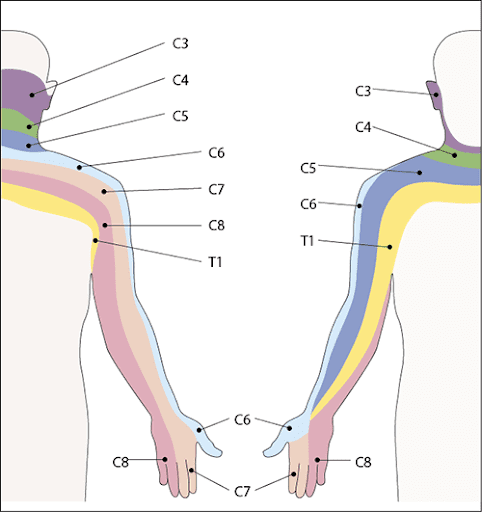
Figure 2: Dermatomes of upper limbs.
Image source: https://nolasportsmedicine.com
The discs and joints in the neck are subjected to wear and tear over time due to the following factors:
- Prolonged poor posture – some of us are predisposed to prolonged, static postures that strain the neck muscles and place high load on the cervical spine.
- Degenerative process – the aging process can start in our neck as early as 40 years old. Common degenerative conditions of the cervical spine include arthritic changes, spinal stenosis, and spondylolisthesis.
- Injury to the neck – any trauma to the neck, for example from a fall, accident, or fracture, can accelerate the degeneration process.
On rare occasions – pain in the arm is caused by cancer in the lung, neck, or spine.
Any anatomical changes due to the above factors may lead to disruption of nerve signals. One of the most common conditions that leads to nerve irritation is a desiccated disc, commonly known as a “slipped disc”. The desiccated disc moves into the nerve root exits, sitting on the nerve that exits the spinal segment (Figure 3). and leads to nerve irritation, commonly known as ‘pinch nerve’ or nerve impingement.
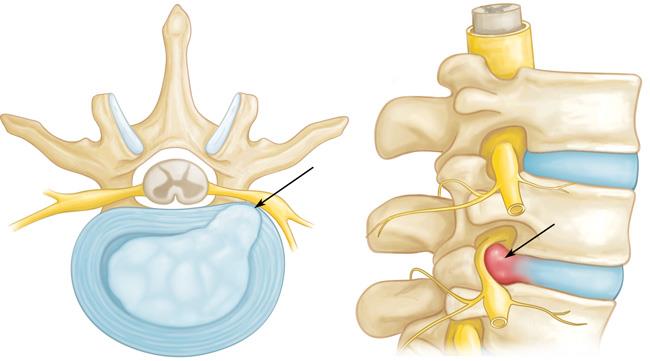
Figure 3: Cervical nerve root impingement.
Image source: https://orthoinfo.aaos.org
Nerve irritation leads to 2 conditions:
- pain running down the arm – cervical radicular pain; and
- pain in the arm with numbness or change of sensation – cervical radiculopathy.
This article focuses on Cervical Radicular Pain, while cervical radiculopathy will be discussed in another article, check it out in our blog.
In short, sharp pain in your arm that runs down from your neck is caused by nerve irritation in the neck, and it often relates to the top three factors mentioned above.
What Are the Symptoms of Cervical Radicular Pain?
Classical signs of cervical radicular pain are:
- Radiating pain – sharp, burning, or aching pain that originates in the neck and travels into the shoulder, arm, or hand.
- Pain affected by head position – some find that certain head or neck positions relieve the pain, such as tilting away from the painful arm; while other positions worsen the pain, such as bending forward or tilting towards the painful side.
- There’s no weakness or loss of sensation in the arm
How Do You Know It’s REALLY Due To A Nerve Irritation in My Neck?
Good question. How do we confirm it’s truly coming from the neck, when other tissues around the neck or shoulder can also be possible sources of pain? There are two parts to diagnosing this.
If you come to a physiotherapist first, we will go through:
- Case history
- discussing your symptoms, daily activities, previous injuries, what aggravates the pain, and what eases it.
- Physical examination
- testing your neck range of motion, assessing your posture, and examining all segments of your cervical spine.
- In the physical examination, we focus on identifying what are the structures contributing to your nerve pain. We will go through neurological tests such as testing your skin sensation.
- In the previous article, you learned about most neck muscle tightness usually comes from these 4 muscles,
- Upper Trapezius
- Levator Scapulae
- Scalenes
- Sternocleidomastoid (SCM)
- A trained and skilled therapist can also correctly identify which cervical spine exiting nerve roots are affected using a special technique known as cervical spine passive accessory intervertebral movements (PAIVMs). This assessment will be able to reproduce the pain originating from nerve roots in specific directions.
- Special tests such as:
- Spurling’s test
- Other tests that help us rule out alternative hypotheses
If the above tests are positive and the assessment points towards cervical radicular pain, we may refer you to a spine surgeon or orthopaedic surgeon for further assessment or an MRI. MRI is the gold standard in diagnosing specific neck conditions, including both cervical radicular pain and cervical radiculopathy.
So, What Can I Do About It? Can Physio help?
Whether you come with or without an MRI, if your assessment points in the direction of cervical radicular pain, we will take an evidence-based approach to treatment. Our goal is to reduce pain, restore movement, and strengthen the shoulder through non-surgical treatment options.
We begin by offloading the irritated or compressed nerve through:
- Manual therapy focus on:
- Joint mobilisation of affected neck segments:
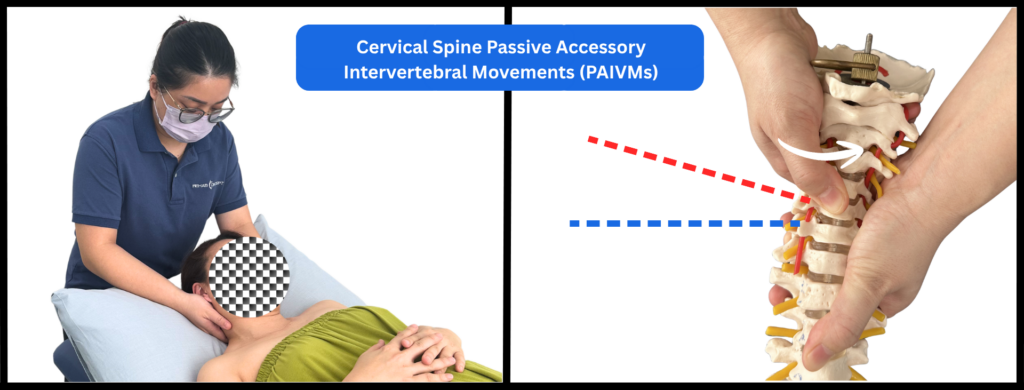
- Passive Accessory Intervertebral Movements (PAIVMs) are manual therapy techniques used by physiotherapists to assess and treat joint stiffness and pain. We do this by applying passive pressure to specific vertebral segments, moving the spinal segment in a specific direction to improve movement and reduce pain(see photo below). This technique also helps to free up the impinged nerve in the joint.
- Muscles release
- The four commonly tight muscles are as mentioned above. There might be other deeper muscles involved. You can check out how we work on muscle release in the previous article – Is My Neck Pain Coming from a Muscle or a Nerve?
- Exercise therapy
- guided, specific exercises targeting neck flexibility and strength.
- Postural training & activity modification advice
- We assess and help improve your posture through stretching and ergonomic advice to further offload the neck and irritated nerve. We also look at modifying daily activities that aggravate pain to make them more manageable.
Most cases (75–90%) of cervical radicular pain improve within 4–12 weeks with consistent physiotherapy. Severe cases may require corticosteroid injections or, in rare instances, surgery.
What You Need to Know
To summarize,
- Cervical radicular pain originates from the neck due to nerve root irritation/impingement.
- It can progress to, or worsen into, cervical radiculopathy when nerve irritation or compression increases.
- 75–90% of cases improve with physiotherapy and pain management.
Frequently Asked Questions (FAQ)
Here’re some other FAQ you need to know:
- Why does my neck pain travel down my arm?
This usually happens when a nerve in the neck is irritated or compressed, causing pain to travel along the nerve pathway. - Is this what people mean by a “pinched nerve”?
Yes. A “pinched nerve” refers to irritation or compression of a nerve root in the neck. - What does nerve pain feel like in the arm?
It can feel sharp, burning, or tingling, and may travel into the shoulder, arm, or even the fingers. - Can neck pain spread without a serious problem?
Yes, mild nerve irritation can cause referred pain. However, it should still be assessed if it persists. - Why does certain neck movement worsen the pain?
Movement can increase pressure on the nerve, especially if the joint or disc is already irritated. - Will this pain go away on its own?
In many cases, symptoms improve over time, especially with proper management and activity modification. - Should I stop moving my neck if it hurts?
Not completely. Gentle, guided movement is important, but avoiding aggravating positions is key. - Can physiotherapy help reduce the arm pain?
Yes. Treatment focuses on reducing pressure on the nerve and improving movement, which helps ease symptoms. - I want to find out more about my neck pain, who should I contact?
You can reach out to our centres by clicking on the floating WhatsApp button on the right — we’ll be happy to guide you.
Don’t forget to check out the two other articles:
Is My Neck Pain Coming froma Muscle or a Nerve?
Why Is My Arm Getting Weak from Neck Pain?
Follow our Instagram and check out some helpful tips here: https://www.instagram.com/reel/DFhtqPkPhdw/?igsh=dnZ4OWZlc2Q2OGlt