Is My Lower Back Pain a Muscle Strain or a Slipped Disc?

Low back pain is one of the most common musculoskeletal problems, but it isn’t caused by just one structure. Pain may come from muscles or ligaments (strain), spinal joints, intervertebral discs, or irritated nerves. Because each structure behaves differently and responds to different treatment approaches, identifying the most likely pain mechanism is important.
What Is a Lumbar Muscle Strain?
A lumbar muscle strain is a problem affecting the muscles of the lower back, and it may also involve the tendons that attach muscles to the bone. It occurs when the tissue is stretched more than its normal range or sustains a small tear. This causes inflammation in the area and the surrounding muscles may tighten — often leading to stiffness or sudden “catching” spasms.
What Are Common Causes of Lumbar Muscle Strains?
A lumbar muscle strain often happens during everyday activities—not just intense sports. In many cases, the lower back gets injured when it’s forced to handle more load or movement than it can comfortably control. Here are some of the most common reasons it occurs:
1) Overload or overuse
One of the primary triggers is usually asking the back to do too much. This can happen when you lift something that’s heavier than expected, repeating the same lifting or bending motion for a long time, or jumping into a new workout routine that your body is not used to yet. Even if the movement seems “normal” to you, the tissue can become irritated when it’s pushed past its current capacity.
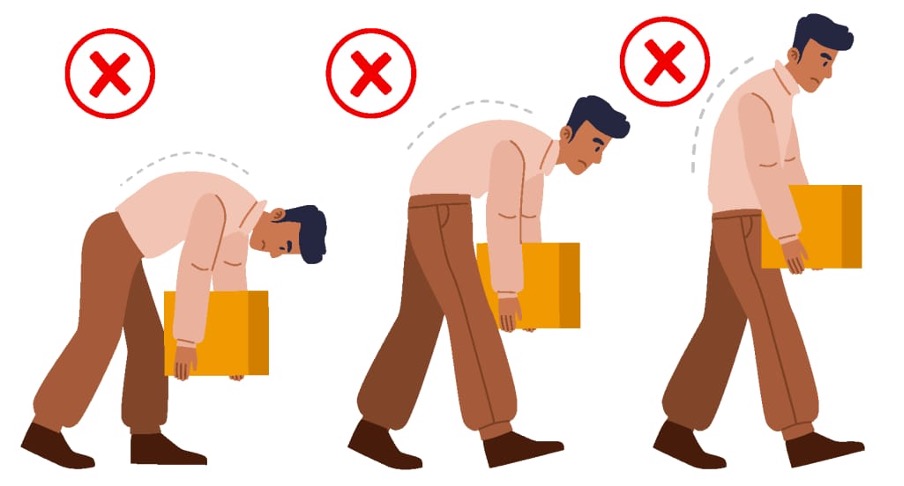
2) Poor lifting technique
How you lift an object is as important as what you lift. Strain is more likely when you bend mainly from the waist with a rounded lower back, twist while carrying an item, hold the object far from your body, or attempt to lift when you’re already tired. These positions place extra stress on the lower-back muscles, making them more vulnerable to injury.
 3) Sudden twisting or awkward movements
Sometimes, a strain can happen all of a sudden—like rotating quickly, suddenly changing direction, slipping or tripping, or unexpectedly reaching overhead. These quick movements can catch the muscles unexpectedly, especially if they don’t have time to brace and stabilize the spine.
4) Factors that increase risk
There are certain habits and body limitations that can make strains more likely. Reduced core stability or hip strength, tight hamstrings or hip flexors, long hours of sitting, poor sleep, inadequate recovery, and returning to activity too soon after time off can all increase stress on the lower back and lower your tolerance for lifting or twisting.
Common symptoms of a lumbar strain (what it commonly feels like)
Lumbar strain often starts suddenly and can make the lower back feel painful. While symptoms vary, these are some of the most common experiences:
- Sudden low-back pain: the back pain may start as a sharp “pull” or a deep ache, ranging from mild to intense.
- Pain with movement: This is often worse when bending, twisting, walking, or standing up from a chair.
- Pain with coughing/sneezing: it can briefly increase pressure in the trunk and trigger a pain spike.
- Muscle spasms: the back muscles may tighten suddenly to protect the area, making pain feel stronger.
- Stiffness: the lower back can feel tight or “stuck,” especially when trying to straighten up.
- Tenderness to touch: the sore area may feel sensitive when pressed.
- Limited range of motion: movements like bending forward, extending backward, or rotating may feel restricted.
- Posture changes: some people stand slightly tilted or “crooked” to avoid painful positions.
Why Does a Muscle Strain Hurt?
A muscle strain hurts largely because your body treats the injury like a threat and switches on a “protect and repair” response:
- Inflammation (repair response):
When muscle fibers are overstretched or torn, the body sends blood and healing cells to the area. This causes swelling, warmth, and tenderness, and it also makes pain nerves more sensitive—so movement and pressure hurt more.
- Muscle guarding (protective tightening):
The nervous system automatically tightens the injured muscle (and nearby muscles) to reduce movement and stop further damage. This feels like stiffness and tightness, and it can be painful because the muscle is “working” even at rest.
- Protective spasms (involuntary contractions):
Sometimes the muscle contracts suddenly without the person trying. These spasms are a strong protective reflex to immobilize the area, but they can feel sharp, cramp-like, and very painful.
What Is a “Slipped Disc” (Lumbar Disc Herniation)?
A “slipped disc” is a commonly used term today, but in reality the disc usually doesn’t actually “slip” out. Instead, the disc’s tough outer layer can weaken or develop a small tear. This allows the softer inner material to bulge outward or sometimes leak out, which can press on or irritate nearby nerves.
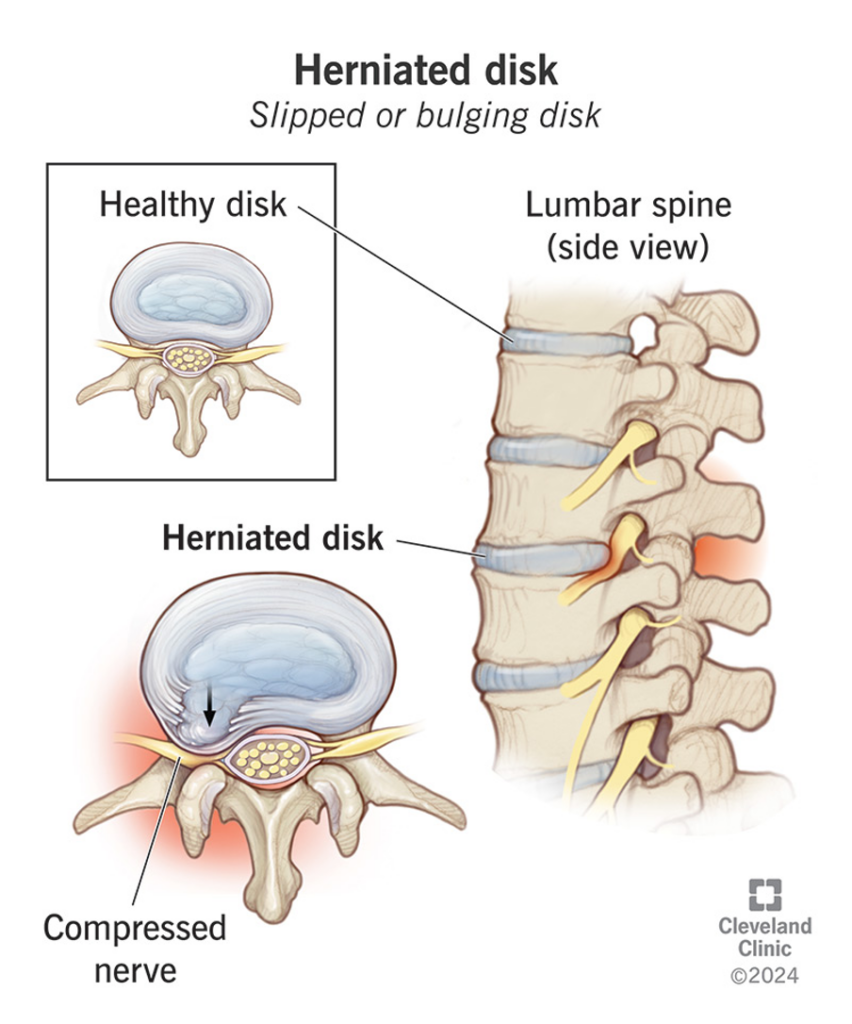 Image source: Cleveland Clinic. (2021, July 1). Herniated disk: Symptoms, causes, tests and treatment. Cleveland Clinic. https://my.clevelandclinic.org/health/diseases/12768-herniated-disk. Used for educational purposes.
What Happens to the Disc: Bulging vs Herniation
1) Disc bulge
A disc bulge is when the disc starts to stick out, but the outer layer is still mostly holding together. It’s usually more of a wide, rounded bump rather than one sharp spot. Sometimes it doesn’t touch a nerve at all, so you might only feel low back pain—or nothing noticeable.
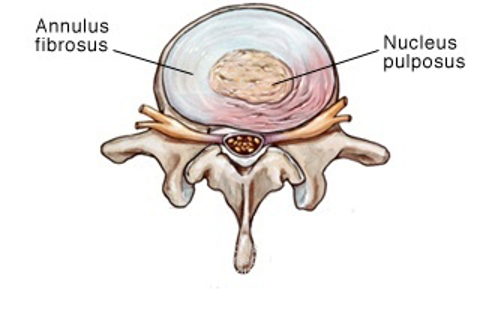 Image source: Physiopedia. (n.d.). Disc Herniation. Physiopedia. https://www.physio-pedia.com/Disc_Herniation. Used for educational purposes.
2) Disc herniation (the classic “slipped disc”)
A herniated disc is a step further. The outer layer usually develops a small tear, and the softer inner material pushes out more clearly. This is more likely to irritate or press on a nerve, which is why people often feel symptoms that travel down the leg.
Types of disc herniation
- Protrusion: the disc material pushes out, but it’s still mostly contained
- Extrusion: the material pushes out beyond the disc edge more obviously
- Sequestration: a small piece breaks off and becomes a “free fragment”
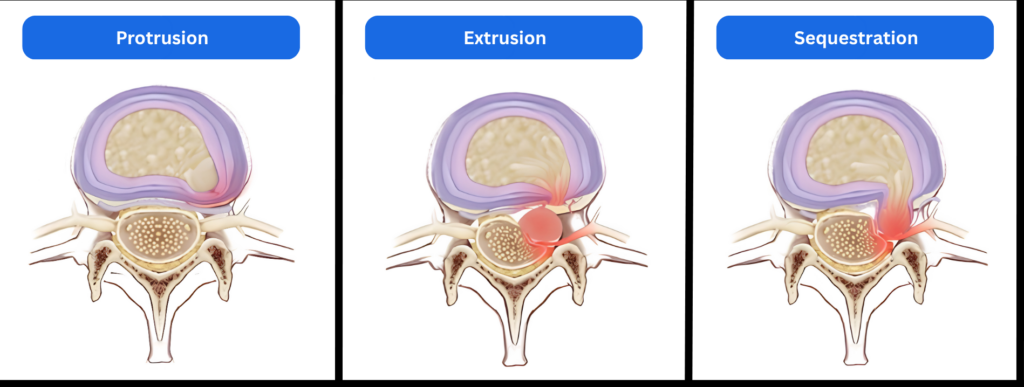 Image source: Physiopedia. (n.d.). Disc Herniation. Physiopedia. https://www.physio-pedia.com/Disc_Herniation. Used for educational purposes.
Common symptoms of “Slipped Disc” (what it commonly feels like)
- Radiating leg pain (classic giveaway)
- It often starts in the low back and/or buttock and then travels into the thigh, calf, and even the foot. It also frequently goes below the knee—a common clue that the pain is nerve-related, not just a muscle strain.
- Sharp, burning, or electric pain
- Often described as shooting or “electric shock” pain, this discomfort can feel sudden and intense. It may come in short bursts, especially when you change positions or do movements that irritate the nerve (like sitting too long, bending forward, or twisting).
- Numbness and tingling
- You may notice pins-and-needles or a numb/“less sensitive” feeling in parts of the leg or foot. These sensations often follow a specific pathway or zone. This is because different nerve roots supply different areas—so the exact location can provide a hint at which nerve it is being irritated.
- Weakness in certain movements
- You might notice weakness with certain movements, like having trouble lifting the foot or big toe (sometimes it feels like the foot “drags”) or difficulty pushing off through the toes when you walk. Because of that, the leg can feel less steady, especially on stairs, uneven ground, or during longer walks as the muscles fatigue.
- Symptoms triggered by posture/pressure
- It’s commonly worse with sitting (especially long drives or slouching), aggravated by forward bending, and can even spike suddenly with coughing, sneezing, or straining
Disc Bulge vs Disc Herniation
| Disc Bulging | Disc Herniation | |
| Definition | The disc “spreads out” a bit. | A part of the disc “pushes out” more in one spot. |
| Disc outer layer | Usually still intact (just stretched). | More likely to have a small tear. |
| Shape | Wide/broad bulge. | More focused bump/protrusion. |
| Nerve involvement | Less likely to irritate a nerve. | More likely to irritate or press on a nerve. |
| Common symptoms | Often mild or no symptoms; may cause back/neck ache. | Can cause sharper pain and symptoms down the leg (e.g., sciatica). |
| Numbness/tingling/weakness | Less common. | More common (if a nerve is affected). |
Key Differences Between Muscle Strain and Disc Herniation
- If it’s local tightness/spasm and tender to touch → more like a muscle strain
- If pain shoots down the leg or you have tingling/numbness → more like a disc herniation
- If coughing/sneezing clearly worsens symptoms → can suggest disc/nerve involvement
When Should You Seek Medical Attention?
Most back pain improves with time, gentle movement, and the right rehab. But sometimes symptoms are a sign you need medical assessment—especially if a nerve is involved or you’re feeling generally unwell.
Seek urgent care immediately (don’t wait)
Get emergency help if you notice:
- New bowel or bladder changes, like loss of control or difficulty passing urine
- Numbness in the saddle area (around the groin/genitals/inner thighs)
- Rapidly worsening weakness in the leg(s) or trouble walking
- Severe, escalating pain that doesn’t settle at all
These can be rare but serious signs that need immediate assessment.
Book a doctor’s review soon (within 24–72 hours)
Arrange medical review if you have:
- Pain that shoots down the leg and doesn’t settle
- Numbness, tingling, or pins and needles that is persistent or worsening
- New weakness (e.g., foot slapping, foot drop, grip weakness, dropping items)
- Significant pain after a fall, accident, or sudden heavy lift
- Back pain with fever, feeling unwell, or unexplained weight loss
Even without red flags, consider a review if:
- Symptoms haven’t improved after 1–2 weeks
- Pain is stopping sleep, work, or daily activities
- Episodes keep coming back repeatedly
If your symptoms include radiating leg pain, numbness, or weakness, or you notice bowel/bladder changes, it’s safest to get a medical assessment immediately.
Frequently Asked Questions (FAQ)
- When should I worry about my low back pain?
- Seek medical attention if you experience:
- worsening weakness
- numbness in the groin area
- loss of bladder or bowel control
- severe or escalating pain
- fever or unexplained weight loss
- Seek medical attention if you experience:
- Is imaging (MRI/X-ray) always necessary for low back pain?
- Not always. Many cases of back pain improve without imaging. Scans are usually considered when symptoms are severe, persistent, or involve significant nerve-related signs.
- Can a low back pain heal on its own?
- 90% of acute low back pain normally resolved or improved significantly between one to two weeks. The recovery depends on factors such as severity of tissues damage and swelling / inflammation, early pain management, one’s coping strategy, etc.
- Should I apply a hotpack or an icepack to ease my low back pain?
- If you have low back muscle spasm, hotpack helps to reduce the muscle spasm, therefore reduce pain.
- Can a disc bulge heal on its own?
- Many disc bulges and herniations improve over time with appropriate movement, activity modification, and rehabilitation. Symptoms often settle gradually over weeks to months.
- Should I rest completely if I have low back pain?
- Prolonged bed rest is usually not recommended. Gentle movement and gradually returning to normal activities are often more helpful than complete inactivity.
- Can coughing or sneezing worsen low back pain?
- Yes. Coughing or sneezing increases pressure inside the spine and can temporarily worsen symptoms — especially if a disc or irritated nerve is involved.
- I want to find out more about my back pain, who should I contact?
- You can reach out to our centres by clicking on the floating WhatsApp button on our page — we’ll be happy to guide you
Follow our Instagram and check out some helpful tips here: https://www.instagram.com/p/DFmX4CIPYOA/