Text Neck : How Screen Time Causes Neck Pain and Poor Posture

If you are reading this on your phone, pause briefly and assess your posture. Are you leaning your head forward, rounding your shoulders, or lowering your chin toward your chest? If so, you could already be showing the first signs of “text neck”; a modern musculoskeletal issue that has become more widespread with the rise of screen use in daily life.
What Is Text Neck?
“Text neck” or “Tech Neck” describes the repetitive strain and potential damage that result from holding the head in a forward-leaning position for extended periods, usually when looking down at your phones, tablets, or laptops. This forward head posture puts excessive pressure on your cervical spine (neck region).
In a neutral position, the head weighs about 4-5 kg. The neck is design to support this weight efficiently when the ears are aligned over the shoulders. However, as it tilts forward, the mechanical load on the neck rises significantly. The farther the head shifts forward, the harder the muscles and connective tissues must work to keep our neck up against gravity. At roughly about a 60-degree angle (which is common during texting), the neck can bear up to 27 kg of force, similar to carrying a small child on your neck for hours.
Over time, this unnatural strain can lead to pain, stiffness, and even long-term spinal problems.
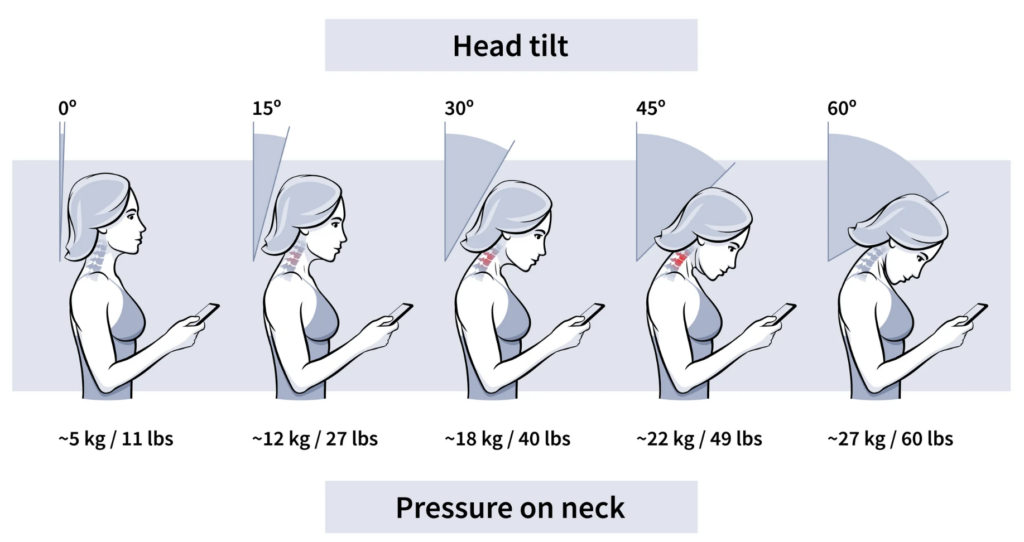 Figure 1: Pressure on neck according to different angles.
Image source: Schneider Clinic. Used for educational purposes.
What Are the Symptoms of Text Neck?
Text neck does not develop overnight – it tends to build up slowly, often beginning with mild, intermittent discomfort. Many people tend to ignore early warning signs until the pain worsen.
Few common signs to watch out for:
- Neck and shoulder pain (often complains of ache/ sore)
- Headaches (especially at the base of skull)
- Stiffness and reduced mobility
- Upper back pain
- Tingling sensation or numbness in arms (in more severe cases)
If these symptoms sound familiar, your posture may be the underlying issue. And if left unaddressed, these issues can evolve into long-term pain with bad posture and muscular imbalances.
Why Screen Time Is the Culprit?
In today’s era, excessive usage of screen time is often unavoidable for us. Whether for work, staying connected, entertainment, or even fitness routines; most of our day is spent in front of a screen. While technology has made life more convenient, it has also become a growing physical concern seen frequently at present.
To be fair, the real issue isn’t simply how much we use our gadgets, but the way we position ourselves while using them.
“Text neck” does not just come from texting.
Several everyday habits contributing to the development of text neck includes:
- Prolonged downward gaze at phones or tablets
- Slouching or rounding the shoulders while using a laptop
- Poor workstation ergonomics (such as low screens or unsupported seating)
- Staying in one position for extended periods without breaks
How It Affects? (Biomechanics of Text Neck)
Ideally, our body will always try to find the most comfortable resting position to ease any discomfort. By doing so, our body biomechanics, tissue adaptation, muscle works, and neuromuscular control will all take places subconsciously.
Hence, let us take a look on how it affects our structures:
- Forward Head Posture
The most obvious postural change in text neck is developing a forward head posture (FHP). In ideal posture, the head is balanced over the spine, with muscles working with minimal effort and joint loading is evenly distributed. However, with FHP, the center of gravity changes as the head shifts forward, causing the neck muscles to contract continuously to prevent the head from dropping further forward. This creates overactivity of the muscles, resulting to muscle spasm and tightness.
- Muscle Imbalance
With an altered neck position, the surroundings muscle groups will naturally respond to adapt – but in a wrong way. Hence, muscle imbalance occurs when some muscles become shortened while some weaken.
Common muscles involve:
- Tight or overactive muscles: upper trapezius, levator scapulae, sternocleidomastoid (SCM), pectoralis major and minor, suboccipital muscles
- Weak or inhibited muscles: deep cervical flexors, lower trapezius, rhomboids, serratus anterior
As these imbalances occurs, the body loses proper alignment and stability, leading to pain and discomfort.
- Muscle Physiology and Fatigue
Muscles are designed to contract and relax dynamically. In text neck posture, many muscles remain in a low-level static contraction for long periods.
This leads to:
- Reduced blood circulation
- Lower oxygen delivery to the muscle tissues
- Accumulation of metabolic waste products
- Increased muscle fatigue
Over time, trigger points and muscle tenderness will develop. And if it worsens, some may even complaint of headaches as some of our neck muscles are connected to our head.
- Joint and Disc Stress
As mentioned above how different neck angles shows different amount of pressure to the spine (the more the head is titled forward, the more compression will be on the spine); hence the passive structures of the spine will also be affected.
Increased pressure may occur in:
- Cervical facet joints
- Intervertebral discs
- Ligaments
With a prolonged looking down head posture, it will increase the pressure on the discs between our vertebral column, reduce joint mobility, increase stiffness, and accelerate degenerative changes in some individuals. Likewise, if it affects badly with the involvement of spinal nerves compression, symptoms such as tingling, or numbness may develop.
Although posture alone does not directly cause spinal degeneration, the repetitive mechanical stress may contribute to the structural irritation over time.
- Neuromuscular Adaptation
The nervous system adapts to repeated posture habits.
When poor posture becomes habitual:
- The brain begins recognizing it as “normal”
- Postural muscles change activation patterns
- Movement coordination becomes altered
This is why many people unconsciously return to their improper posture even after correcting themselves temporarily.
Therefore, physiotherapy aims to restore better movement awareness and neuromuscular control through repetition and exercise training.
How Physiotherapy Treatment Helps Text Neck?
Physiotherapy approaches text neck as more than just a “neck pain” problem. At Rehab Concept, we help by not only to relief symptoms but also aims to address the underlying mechanical and muscular factors to prevents it from recurring.
What to expect in your physiotherapy session:
- Postural assessment and movement patterns+ re-education
Your physiotherapist will begin by observing how your body moves and aligns during everyday positions such as sitting, standing, and walking. This includes assessing the head, neck, shoulders, and spine to understand how your posture may be affecting your neck. With this, you will be more aware of your posture and re-educate your body to adjust to the posture on how it is supposed to be.
By identifying muscles that are tight, overworked, or weak, we can better understand what is placing extra stress on your cervical spine. Rather than simply easing the pain, this assessment helps us address the underlying cause of your symptoms for longer-lasting improvement.
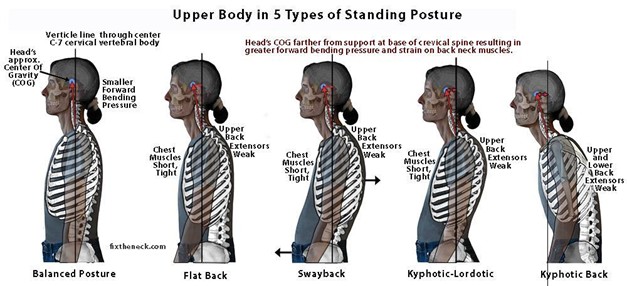 Figure 2: Postural assessment from side view
Image source: https://www.mmrm.com.au/neck-remedial-massage/
- Manual therapy to relieve muscle tightness and joint stiffness
Depending on your condition, treatment may include hands-on techniques such as:
- Soft tissue massage
- Trigger point release
- Joint mobilization
- Assisted stretching techniques
These treatments help relax tight muscles, improve blood circulation, and reduce tension around the neck and shoulders. Improving joint mobility in the neck and upper back can also make movement feel smoother and more comfortable during daily activities.
- Stretching exercises to improve muscle flexibility
When muscles stay tight for long periods, they can become stiff and restrict normal movement. Your physiotherapist may guide you through suitable stretches to improve flexibility and restore healthy muscle function.
Common muscles that may be targeted include:
- Upper trapezius
- Levator scapulae
- Chest muscles (pectorals)
- Sternocleidomastoid (SCM)
- Suboccipital muscles
- Specific exercises to strengthen weakened muscles
Over here, you may expect to perform a variety of strengthening exercises via your own bodyweight, free weights with dumbbells, resistance bands, and also through Pilates. These exercises will carefully be introduced based on your ability and recovery stage.
Your exercise program may focus on strengthening:
- Deep cervical flexors
- Lower trapezius
- Rhomboids
- Serratus anterior
- Thoracic extensor muscles
As strength and muscle coordination improve, many patients notice better posture awareness, reduced neck tension, and less fatigue during prolonged screen use or desk work.
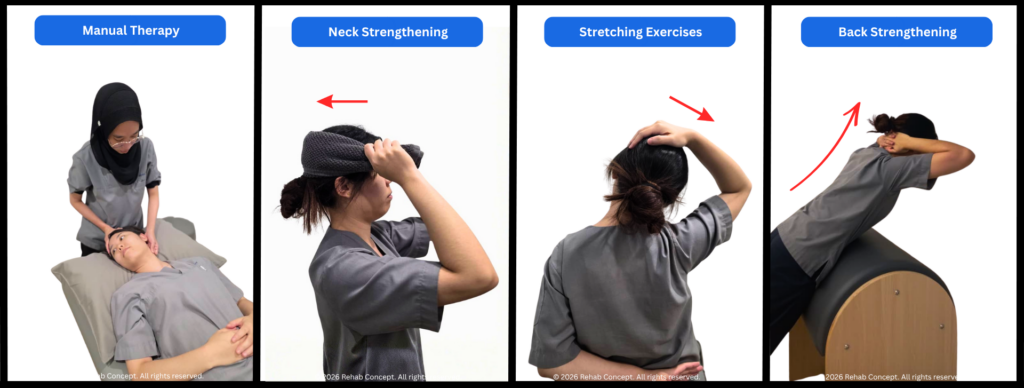 Figure 3: Physiotherapy management
- Practical ergonomic advice tailored to your workspace and daily habits
Since text neck is often influenced by daily habits and prolonged device use, physiotherapy also focuses on preventing symptoms from returning. Your physiotherapist will provide recommendations based on your work setup, study environment, and screen habits.
Tips for quick fix:
- Raising screens to eye level
- Using supportive seating
- Positioning keyboards and monitors correctly
- Holding phones higher instead of looking downward
- Taking regular movement breaks
- Alternating sitting and standing positions
The goal of ergonomic education is not to maintain one rigid posture all day, but to encourage movement and reduce prolonged static loading on the spine.
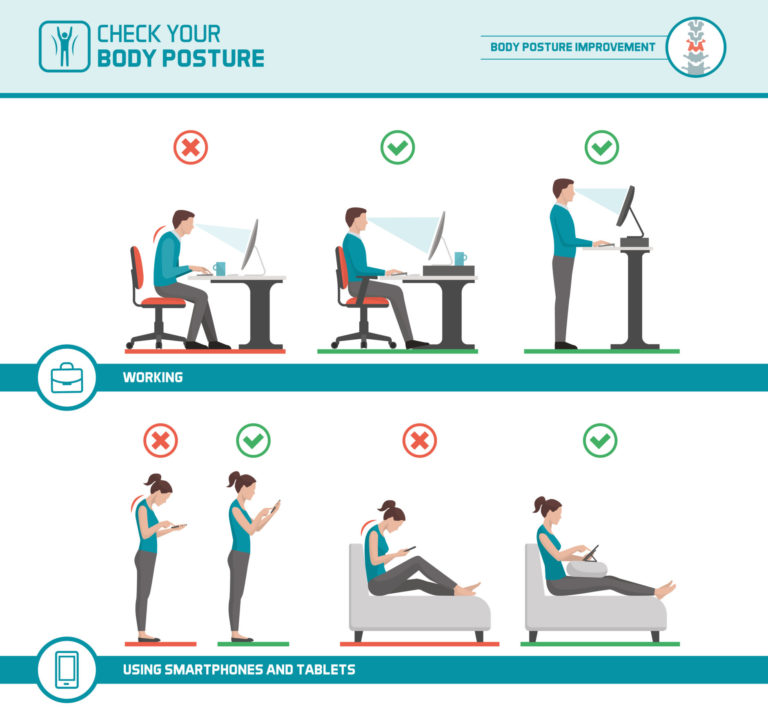 Figure 4: Proper ergonomic postures
Image source: https://dl-global.com/safety-moment-ergonomics/
What You Need to Know
To summarize,
- Text neck is developed through improper posture due to prolonged screentime usage from our gadgets.
- Continuous stress will be loaded on the surroundings muscles, ligaments, intervertebral disc, and joints of the neck and upper body – leading to muscular imbalances, altered movement patterns, and causing various musculoskeletal problems.
- Physiotherapy can help in managing text neck by not only short-term pain relief, but also focuses on addressing the root cause for long-term postural correction and prevention.
Frequently Asked Questions (FAQ)
Here’re some other FAQ you need to know:
- Is text neck permanent?
Not necessarily. With early intervention, proper physiotherapy, posture correction, and consistent exercises, most cases can be reversed and improved significantly.
- Is text neck serious?
If left untreated, it can lead to chronic pain, reduced mobility, and spinal issues.
- How many hours of screen time is too much?
There’s no exact number, but you do need to change how you use it. Better posture and regular breaks make a big difference.
- Can children develop text neck?
Yes. With increased use of phones, tablets, and computers at a younger age, poor posture is becoming more common in children. Hence, early education on posture is important.
- Are posture correctors useful?
They may provide temporary support to maintain better alignment, but they are not a long-term solution on their own. Improving muscle strength, posture control, and movement habits is usually more beneficial for lasting results.
- How long does recovery usually take?
Recovery varies depending on how long the symptoms have been present, daily screen habits, posture, stress levels, and muscle condition. Some people notice improvement within a few sessions, while others may require a longer rehabilitation plan to fully restore strength and posture control.
- Why do my symptoms return even after resting?
Rest may temporarily ease irritation, but symptoms often return if the underlying factors remain unchanged (weak muscles, poor posture etc).
- Are exercises important even if my pain improves?
Absolutely. Pain reduction is only one part of recovery. Strengthening and mobility exercises should be enhanced consistently to lower the recurrence of symptoms.
- When should I see a physiotherapist?
If you have persistent neck pain, stiffness, or headaches that does not improve with rest and simple adjustments, it is time to seek professional help.
- I want to find out more about my neck pain, who should I contact?
You can reach out to our centres by clicking on the floating WhatsApp button on our page — we’ll be happy to guide you.
Follow our Instagram and check out some helpful tips here:
https://www.instagram.com/p/DZT8fTmp7Xa/
https://www.instagram.com/reel/DZWe02iJ7Mx/?utm_source=ig_web_copy_link&igsh=MzRlODBiNWFlZA==
https://www.instagram.com/reel/DZZq9KTJh4V/?utm_source=ig_web_copy_link&igsh=MzRlODBiNWFlZA==